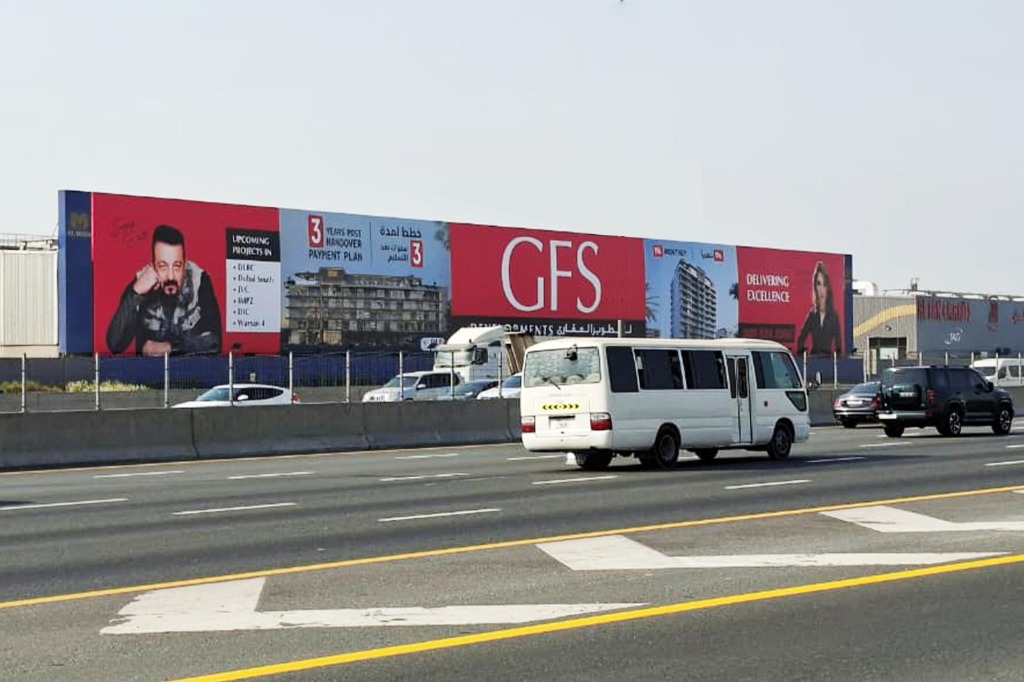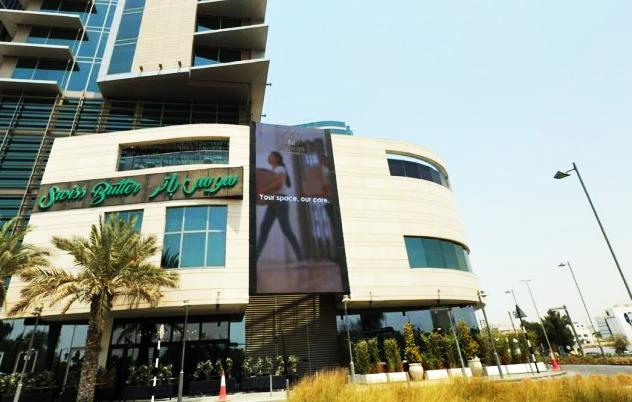
Static billboards vs digital screens comes down to a trade between constant presence and changing content. A static billboard shows one printed message all day, every day of the booking. A digital screen shows several messages in turn, which lets you update quickly but means your message is on display only during its share of the loop.
The questions below are the ones clients actually ask us once the quotes are on the table. Each answer is short and practical, and none of them depends on invented statistics, because the right answer depends on your site, your message and your timing.
What is the real difference between a static billboard and a digital screen?
The real difference is how the message occupies time. A printed board owns the position for the whole booking, so every passer-by sees your message whenever they look. A screen divides the position among advertisers or messages, so what people see depends on when they look.
Everything else, from production to maintenance to cost, follows from that one difference. It is also why a screen is not simply a better board: it is a different kind of product with different strengths.
Which one gives my message more airtime?
A static billboard gives your message more airtime on that single position, because it is there every moment. A digital screen gives you a share of each loop, though the loop may reach several audiences across the day and can be timed to the hours that matter most to you.
That is why the useful question is not which has more airtime, but which airtime you need. A commuter route with heavy morning traffic may suit a screen scheduled for the morning peak. A road where your brand needs to be familiar to the same drivers day after day may suit a board.
How does the cost structure differ?
The two formats spend your money in different places. We are not quoting figures here, as prices depend on the site and the period, but the structure is consistent.
| Cost area | Static billboard | Digital screen |
|---|---|---|
| Production | Printing of large panels | Content design and animation |
| Installation | On-site fitting of the panels | Usually none after the first upload |
| Changes | New print and a site visit each time | A content update |
| Space | The whole position | A slot in a loop |
| Upkeep | Inspection and panel repair | Content checks and scheduling |
If you only run one message, the static route often avoids paying for flexibility you will not use. If you run several, the screen avoids repeating print and installation each time. For a fuller discussion, read our guide to what drives the cost of billboard advertising in the UAE.
How do they perform at night and in strong sunlight?
Static boards depend on lighting at night, and screens depend on their own brightness in daytime glare. A printed board is lit by lamps, so its night look is only as good as the lighting design and the colours you chose. A screen produces its own light, which helps after dark but can wash out in direct sun if the content has weak contrast.
For both, strong contrast and a simple composition do more than any technical setting. Dark text on a pale ground or pale text on a dark ground survives both situations; mid-tone combinations do not.
What does maintenance involve for each?
A static board needs periodic inspection, cleaning and panel replacement if the print is damaged or fades, plus a working lighting system. A screen needs its hardware checked, its content monitored and its schedule kept accurate, and a fault on a screen is more noticeable than a faded corner of a board.
In both cases the question to ask your supplier is who maintains the position during your booking and how quickly they respond. At Al Masa, installation and maintenance during the campaign are part of the service, handled by our own crews. For screens, our LED screens page explains the formats in more detail.
How should the creative differ?
Static creative needs one idea that holds up as a single frame. Digital creative can sequence ideas, but each frame must still make sense on its own, because people may catch only a moment of the loop.
- For a board: one image, one line, one logo, with generous space around each.
- For a screen: short sequences with a clear first frame, a clear last frame, and the brand visible throughout.
- For both: large type and strong contrast, tested at a small size before approval.
Printed work also has technical file requirements. Our artwork and file checklist for billboard printing lists the points that most often cause delays.
Which one suits common situations?
These are starting points, not rules. Each one assumes the site is good, because a weak site undermines either format.
- You are launching a new name and want it remembered: a static position with a bold, uncluttered design usually serves the purpose, since repetition does the work.
- You run a sale or event with a countdown: a screen can show the days remaining without a new print run for every update.
- You have a single, long-lived message: static, because you would be paying for flexibility you never use.
- You are testing two different messages on one route: a screen lets you alternate them and see which prompts more enquiries, using your own tracking such as a dedicated phone number or web address.
- You need the message in front of people in the evening: check how the position is lit or how the screen behaves after dark before choosing either.
When none of these fits cleanly, that is normal. Real briefs mix several of them, and the answer is often a combination of formats, each doing the part it does best.
Can I run both on the same route?
Yes, and it is often the best approach when your message has a fixed part and a changing part. Use a structure such as a unipole for the stable brand message and a screen further along the route for the offer of the week.
Keep the two visually related. If they look unrelated, viewers will not connect them, and you will have paid for two separate campaigns. If you want to compare the two formats from a planning angle rather than a production angle, see our guide to OOH versus DOOH.
A simple path to the decision
- Write down how many different messages you will run and how often they will change.
- List the sites that actually put your message in front of your target audience, ignoring format at first.
- Match each site to the format that is available there and suits your message.
- Check lighting, approvals and maintenance responsibility for each shortlisted site.
- Brief the creative for the format you chose, not for a generic billboard.
Rules and approval processes differ by emirate and by authority, and Al Masa handles approvals for its own sites. When you have a shortlist and want a second opinion, talk to Al Masa through our contact page and we will go through the sites with you.